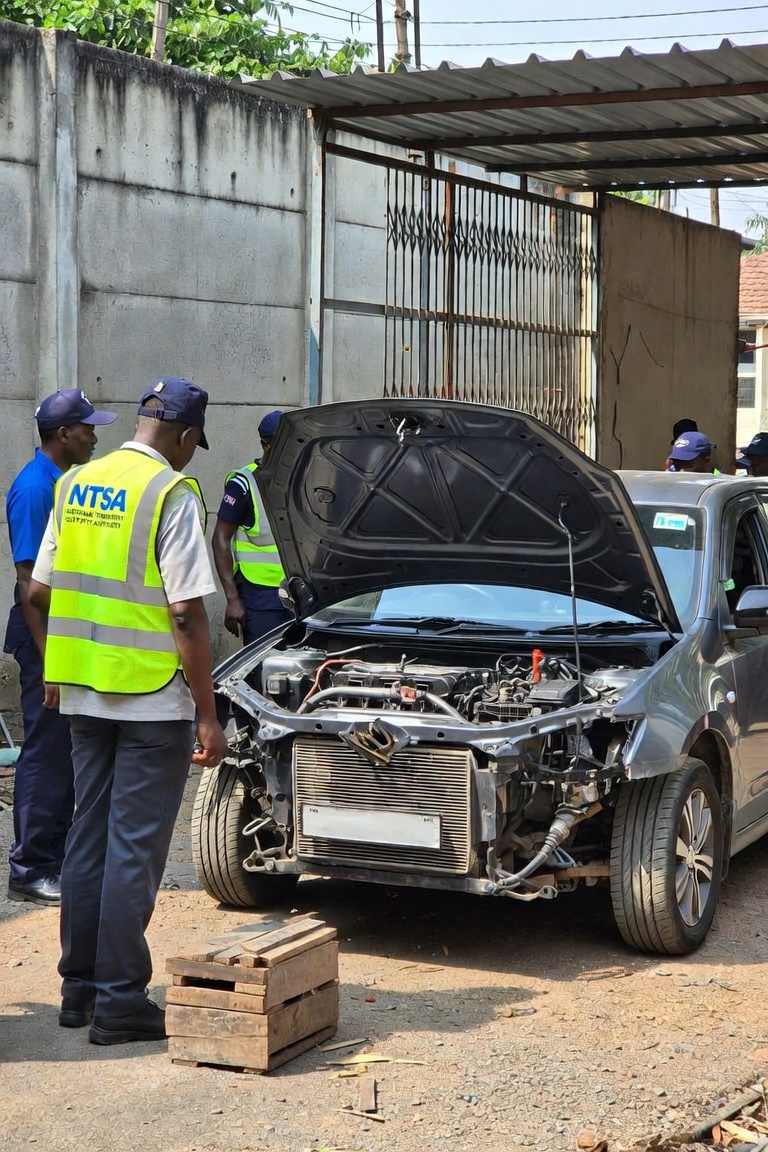
NTSA Mandatory Annual Vehicle Inspection 2026: What Every Kenyan Car Owner Must Know Before You Panic
Booking opens on eCitizen from 1st July 2026 — but the part everyone is getting wrong is who actually has to comply, and when.
My phone started buzzing before 7 a.m. on the 27th of June. Three WhatsApp groups, the same forwarded screenshot, the same caption in capital letters: "NTSA WANTS KES 2,000 FROM EVERY CAR OWNER FROM JULY 1!!" By midday a cousin in Kiambu had texted to ask whether his 2014 Fielder would be impounded if he drove to work on Wednesday.
Here at Cyber Mfukoni, navigating government portals is what we do every single day, so let me do what I always do for the people who walk through our doors — separate the panic from the facts. Because the truth about the NTSA mandatory annual vehicle inspection is more nuanced than the forwards suggest, and knowing that nuance can save you money, a wasted trip, and a lot of stress.
Book Inspection of Car
We provide professional vehicle inspection booking services through NTSA TIMS portal and eCitizen. E...
Let me clear the air first: are you in trouble on July 1?
Here is the single most important thing I can tell a private car owner today, and almost none of the viral messages mention it.
Yes, the inspection programme begins on 1st July 2026, and yes, you can book through the NTSA service portal on eCitizen. But NTSA itself clarified, in writing, that enforcement of mandatory inspection for private motor vehicles will be communicated "in due course" – it is not switching on for private owners this week. The Authority went further and stated that during route checks, traffic officers shall not enforce the private-vehicle inspection requirement for now. The whole private-vehicle piece is effectively on hold until NTSA licenses independent inspection centres and they become operational, because the existing NTSA centres simply cannot swallow six million-plus vehicles at once.
So if you own a private car older than four years, here is the honest position as of today: you are eligible and encouraged to book, but you are not going to be flagged down and fined on the 2nd of July for not having done it yet. You can read NTSA's own framing on the official NTSA services page.
Where the rules do bite immediately is school transport and commercial service vehicles — those continue to be inspected at NTSA centres exactly as before, and police can verify their stickers using the NTSA Mobile App. If you run a school van or a commercial fleet, you do not have the luxury of waiting.
That distinction — private vs. commercial, eligibility vs. enforcement — is the whole story. Hold onto it; everything below builds on it.
What actually changed, in plain Kenyan English
The legal backbone is the Traffic (Motor Vehicle Inspection) Rules, 2026, gazetted as Legal Notice No. 13 of 2026 back in February, working alongside Section 55 of the Traffic Act (Cap 403) and the NTSA Act of 2012. None of that is new law invented overnight; what changed on 1st July is that NTSA chose to operationalise it.
In practice, three things are now true:
Every private and government vehicle more than four years old, counted from the recorded date of manufacture, falls under an annual inspection requirement.
You book that inspection through the NTSA service portal on eCitizen — the same gateway you already use for your logbook and licence. If you want to see it for yourself, it lives at the NTSA service portal.
Driving a vehicle that is required to have a valid inspection sticker without one becomes an offence once enforcement is active — with penalties of up to KSh 20,000, six months in jail, or both, under the Traffic Act.
Note the phrase "recorded date of manufacture." Not the year you bought it. Not the year it landed at Mombasa. The manufacture date on your records. I have already had clients confuse the import year with the manufacture year and almost book an inspection they did not yet need. If you are unsure what your records actually say, that detail sits in your logbook — and our guide on how to download and verify your NTSA eLogbook walks you through finding it without guessing.
Application of Logbook
We provide professional logbook application services through NTSA TIMS portal and eCitizen. Expert a...
Is your specific car affected? Three quick examples
The four-year rule sounds simple until you put real cars against it. Let me use three I could pull from a typical week at our desk.
Mary's 2016 Vitz (manufactured 2016): more than four years old, privately owned. She is in scope and eligible to book — but, being private, not yet under enforcement.
Joseph's 2023 Demio (manufactured 2023): under four years old. He is exempt for now and has nothing to do until the car crosses the four-year mark.
A 14-seater school van: in scope and under active enforcement at NTSA centres today, regardless of age, the moment it carries learners.
There are also genuine carve-outs in the gazetted rules. Tractors used purely for agriculture, golf carts, motorised pedal cycles, and all-terrain vehicles are exempted from routine inspection — though they must still be inspected once before they are ever driven on a public road. So your shamba tractor that never leaves the farm is not your worry.
If you are wondering "is my car older than four years from manufacture, or not?" and you cannot answer with certainty, that is exactly the kind of small question that causes big mistakes. We confirm it for clients before they pay a shilling — because booking the wrong service on eCitizen is a refund headache nobody enjoys.
The real cost: what you'll actually pay
This is where the WhatsApp forwards get loud, so let me give you the figures that have been reported and where they come from rather than a vague "around two thousand bob."
According to the published charges, for vehicles below 3,000cc you are looking at an NTSA booking fee of KSh 1,000 plus an inspection fee of up to KSh 1,000 at the centre — roughly KSh 2,000 in total. For motorcycles and three-wheelers (tuk-tuks, boda), the booking fee drops to KSh 200 and the inspection fee to KSh 300, a total of about KSh 500. These figures were laid out in Tuko's breakdown of the new fees.
Now multiply that across the country and you see why this story has teeth: Kenya has more than six million registered vehicles, and analysts at Citizen Digital estimated the State could collect at least KSh 12 billion a year if every eligible vehicle paid up. That number is precisely why critics are calling this a tax in a roadworthiness costume — more on that shortly.
One practical word of caution from experience: fee schedules and cc bands get revised, and different outlets have quoted slightly different figures in the rush. Before you pay, confirm the current rate showing on the portal for your vehicle. We do that confirmation as part of handling the booking, so you never overpay on stale information.
Pass or fail — here's what actually happens at the centre
People imagine the inspection as a pass/fail exam they either survive or fail catastrophically. The reality is more forgiving, and worth knowing.
If your vehicle passes, you receive an inspection sticker and a report. The sticker is the thing that matters — driving without a valid one (once enforcement applies to your category) is the actual offence.
If your vehicle fails, you do not get arrested. You receive a defect inspection report listing exactly what needs fixing — brakes, lights, tyres, whatever flagged. You then get a 14-day grace period during which re-inspection at the same centre is free. Miss that window, or go to a different centre, and you pay fresh charges. So the smart move on a fail is: fix fast, return to the same centre, re-test free.
I would also strongly advise clearing any pending traffic offences before you go anywhere near an inspection — an unresolved fine can complicate your NTSA records at the worst possible moment. If you are not sure whether you have any outstanding, our guide on how to check for traffic offenses and pay fines online in Kenya shows you how to look before you leap.
How the eCitizen booking works — and where most people get stuck
The official path is straightforward on paper: log into your eCitizen account, open the NTSA service, enter the new TIMS portal, select Motor Vehicle Services, choose the correct registration number, pick inspection, and pay via the M-Pesa STK push. NTSA's portal is reachable through the eCitizen NTSA gateway.
So why do people still end up at our desk? Because "straightforward on paper" and "straightforward at 9 p.m. when the OTP won't arrive and your TIMS account is linked to an old phone number" are two very different things. The most common walls I watch clients hit are:
A TIMS/eCitizen account tied to a SIM card they no longer use, so the password-reset OTP goes nowhere.
A vehicle that does not appear in their online records and needs to be reconciled first.
Paying the wrong service because the portal menus are dense and unforgiving.
Sheer portal downtime during peak demand — and demand right now is anything but normal.
I am not going to pretend the portal is impossible; for some of you it will work first try, and good. But if any of those walls sound familiar, that is precisely the gap we exist to close. We hold accurate, current logins, we navigate TIMS daily, and we book it right the first time — no guesswork, no double payments, no wasted evening. You can see the full sweep of what we handle on our government services overview, or start an NTSA request directly from our NTSA services page.
Why half of Kenya is angry about this
You deserve the full picture, not just the procedure, because the politics around this rollout directly affect how — and whether — it lands on you.
The directive met immediate, loud resistance. The Motorists Association of Kenya called for a full suspension pending genuine public participation. Former Interior CS Fred Matiang'i argued the regime is not evidence-based and questioned whether NTSA can even physically inspect millions of cars without breeding delays and corruption. Rigathi Gachagua threatened to mobilise resistance, and former LSK president Nelson Havi framed the whole thing as a backdoor revival of the Motor Vehicle Tax that Kenyans rejected in 2024. The Daily Nation captured the full uproar and the demands for data justifying the move.
Why does this matter to you, practically? Because public pressure is the reason the private-vehicle enforcement got deferred in the first place. The shape of this programme is still moving. The honest position is: book if you want to be ahead of the queue, but understand the enforcement timeline for private cars is being negotiated in real time, and we are tracking those updates so our clients are never caught off-guard. For the bigger picture of how Kenya keeps digitising transport — smart DLs, TIMS, e-stickers — I unpacked the direction of travel in our piece on future trends in government services and technology adoption in Kenya.
What I'd tell my own cousin to do right now
So I texted that cousin in Kiambu back. Here is, almost word for word, what I told him — and what I would tell you:
Don't panic and don't rush to a centre on July 1. As a private owner you are not under enforcement yet.
Confirm your manufacture date from your logbook so you know whether you are even in scope.
Clear any pending fines before they tangle with your records.
If your vehicle is school or commercial, treat this as urgent — your category is live today.
When you're ready to book, let someone who lives inside these portals do it so it's done correctly and once.
That fifth point is not a sales line; it is the lesson of every botched self-service attempt I have cleaned up. If you would rather skip the OTP roulette and the portal downtime entirely, that is what we are here for — quietly, accurately, and without the queue. You can learn who we are on our about page, or just start the request and we will take it from there.
NTSA Smart DL
We provide professional NTSA Smart DL application services through eCitizen and TIMS portals. Expert...
Frequently asked questions (for the people asking Google and Gemini right now)
Does every car owner have to inspect their car from July 1, 2026? No. Inspection booking opens on 1st July 2026 for vehicles more than four years old, but enforcement for private vehicles has been deferred and will be announced separately. School transport and commercial service vehicles are inspected at NTSA centres now.
How old must my vehicle be to need inspection? More than four years from the recorded date of manufacture — not the year you bought or imported it.
How much does the NTSA annual inspection cost? For vehicles below 3,000cc, reported charges are about KSh 1,000 booking plus up to KSh 1,000 inspection (≈ KSh 2,000). Motorcycles and three-wheelers are around KSh 500 total. Always confirm the current rate on the portal before paying.
Where do I book the NTSA vehicle inspection? Through the NTSA service portal on the eCitizen platform. No private company has been licensed to inspect vehicles, so ignore anyone claiming otherwise.
What happens if my car fails the inspection? You get a defect report and a 14-day window to re-inspect free at the same centre. After 14 days, or at a different centre, you pay again.
Can I be fined for not inspecting my private car on July 1? Not currently. NTSA stated traffic officers will not enforce the private-vehicle inspection requirement during route checks until enforcement is formally announced.
Has NTSA licensed any private inspection centre? No. As of now, all inspections happen at official NTSA centres. Treat any "private inspection agent" as a red flag.
The rules around this rollout are shifting week to week. We monitor NTSA's announcements daily so you don't have to — and when you're ready to book your inspection, clear a fine, or sort out your logbook without touching the portal yourself, start your NTSA request with Cyber Mfukoni and let us handle the hard part.
About the author
Julius
IT & E-Government Services Specialist
Julius is a Nairobi-based IT specialist with over a decade of hands-on experience navigating Kenya's digital government platforms — eCitizen, NTSA TIMS, KRA iTax, and the Business Registration Service (BRS). He has helped thousands of individuals and businesses cut through the paperwork to access government services online and writes practical, step-by-step guides drawn from that day-to-day experience.
Related Agency
National Transport and Safety Authority
NTSA
We provide expert NTSA services including driving license applications, vehicle registration, logbook transfers, license renewals, and TIMS support. Skip the long queues with our fast, reliable, and affordable assistance.
View Agency ServicesRelated Services
Need Expert Assistance?
Our team can handle the entire application process for you.